5 Reasons it’s Rad that the 2017 Solar Eclipse is Happening in America

For a moment (2:19* to be precise) on August 21, the sun will go dark, for very rare/important scientific reasons: a total solar eclipse. Bet you knew that. An estimated 12 million Americans will experience the sky going dark,  birds going to sleep, and a slight twinge of uncertainty: what if the darkness lasts?

I think it’s particularly awesome that this total eclipse will be experienced across the United States this year. Not because Americans need another reason to seek exceptionalismbut because it’s one of those few monumental moments that remind us that humans are Lilliputian-level tiny.

ed3e0cd47316fd3daab3cf1ddce92c53--jonathan-swift-gullivers-travels.jpg-Lilliputians taking five from their bloody war over which side of an egg to break-

Earth’s conflicts and constructed** societal differences, when observed on a universal time scale,  are just as inconsequential. But we don’t create a whole lot of opportunities for people to see themselves on just #TeamEarth or #TeamHuman–even the Olympics, celebration of peace and understanding through sports, are rooted in competition and the nation-state. This celestial event is an exception.

The Great American Eclipse*** is a reminder that we are all just infinitesimal organisms on a fragile planet. We exist at the pleasure of our solar system’s star.  In 2017, in the wake of the most divisive election in memory, that’s a message that every American needs to feel in their bones. Borders are just lines someone drew once. We have to help each other. We are just one (impossibly small) earth. It’s my hope that every American looks up, gets awed, and wakes up to our commonality as human beings. That’s the number one reason I’m stoked that the eclipse is happening over America. We need this now.


More reasons why it’s rad: 

2) It forces literally everyone who experiences it (by intention or accident) to wonder, “why?” This is scientific curiosity! We need that!   

[Related PSA: Can’t get enough of scientific curiosity? Ready to level-up to inquiry? Citizen science projects are ready for you.]

img_3076a-1.jpg


3) This fashion trend needed to happen. These glasses**** have been waiting years to get outside and live their best lives.

images.jpg


4) It is a celebration of science. Thanks to astronomers and astrophysicists and researchers through the ages,  we know why this is happening. Compare/contrast to this medieval example of people losing their shit. 
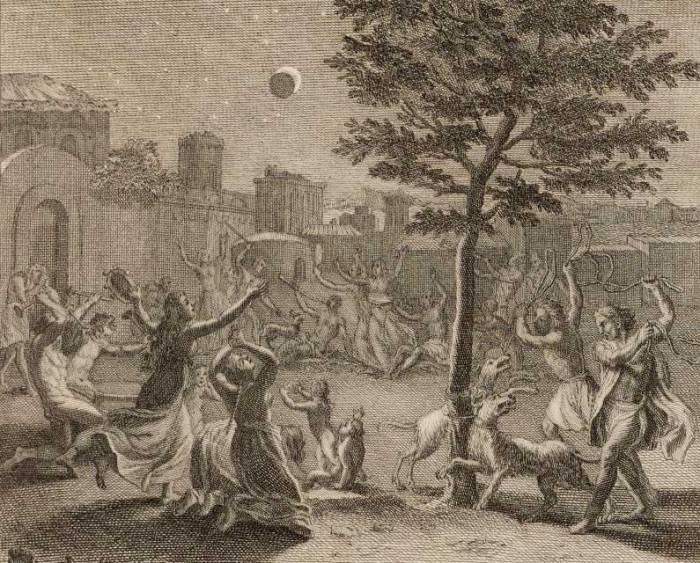
eclipse-peru.jpgEven political unrest was believed***** to be connected with this inexplicably terrifying, armageddon-like astronomical event. While 911 may still receive some panicked calls from those who somehow missed the memo, mass chaos is avoided.

5) Bonus: It’s likely that cell service will cease during the eclipse in many regions along the line of totality. Every American could use a break from Twitter at this point.

Revel in the sound of silence. And the thought of the eternal silence that could be, if the sun didn’t reappear after 2:19 minutes. #blessed to be humans together, alive, on planet earth.

download-1.jpg


So thank you, happy solar accident, for allowing Americans from sea to shining sea to have the total eclipse experience this year. Your timing is impeccable.


giphy.gif


Notes:

*in Madras, Oregon, site of NASA-Sponsored SolarFest. Duration of totality varies by location.

**Great American Eclipse. Must we burden every happy celestial accident that crosses our shores with our exceptionalism and need to be ‘great’?

***Disclosure: I’m pretty into social constructionism.

****Just make sure yours are legit. So that you legit don’t go blind witnessing a beautiful moment of total human/solar connection.

*****People are still attributing astrological and political meaning to the event. But like, fewer people are panicking.

More about the people who follow eclipses, or umbraphiles, in this fascinating NPR piece.
#TeamRefugee could be the most important thing to happen at the Rio Olympics | 2016

download

Amid the economic turmoil and security concerns plaguing Brazil as it prepares for the Rio 2016 Olympics, a new precedent is quietly being set.  For the first time in history, the International Olympic Committee (IOC) has designated a team of Refugee Olympic Athletes, which according to the IOC, “will be treated at the Olympic Games like all the other teams of the 206 National Olympic Committees.”  IOC president Thomas Bach describes the process:

“Having no national team to belong to, having no flag to march behind, having no national anthem to be played, these refugee athletes will be welcomed to the Olympic Games with the Olympic flag and with the Olympic Anthem. They will have a home together with all the other 11,000 athletes from 206 National Olympic Committees in the Olympic village.”

They are the only team that is not formed based on the idea of nation-states. This is symbolic not only of the scale of displacement globally, but also as a hugely public acknowledgement of the changing norms within the global system of nation-states. This is huge.

What’s the big deal? This might just seem like a smart move to drive awareness about displacement. On the surface, it is. It’s  a very pointed political statement by one of the most visible international organizations about the massive scale of displacement globally. How massive? Current estimates put the world population of displaced people at 65.3 million, roughly the same population as France. This is the highest level of displacement on record, and more than 20.2 million of those displaced are designated as refugees, fleeing from persecution and violence. Horror stories of refugee boats capsizing in attempted escapes from conflict zones have become a near-daily occurrence, and the question of which countries will take in refugees has become one of the most contentious issues in global politics.

Team Refugee has emerged as a way to include and acknowledge these displaced people on one of the world’s biggest stages. For scale, in 2012, theLondon Olympics was the most-watched event in TV history. Like ever. This year Team Refugee will be covered by the media, just like all 206 national teams, and their personal stories of the refugee experience will be broadcast to a huge worldwide audience. To have refugees competing, and announcers referring to members as being from Team Refugee over and over for two weeks, at one of the most heavily reported events of the year–this will be hard to ignore. This has the potential to be a big win in bringing awareness ofstatelessness to a new audience, in a new context.

But there’s more. This acknowledgement by the IOC is symbolic of changing norms in the conception of nation states. What are nation-states? The modernnation-state, what we generally perceive of as an area where the cultural boundaries match up with the political boundaries, is a development of the 19th century. It is the idea that nations should be represented within a territorially defined state, and that they have sovereignty.  Scholars, particularly of globalization, have been questioning for some time whether globalization will incite the end of the nation-state, and generally they agree that it is likely to change the nation state to some degree.  This is not a common concept among the general public, for whom it generally goes without question that, for example,  “America” resides physically within the borders of “America.”  But what happens when people of a nation state are displaced from its territory? What happens to the nationality of a people when a nation-state falls apart? How do you reconcile that massive reality (again, 65 million people) with a system built on the concept of the nation-state?

That’s where Team Refugee comes in: the sheer number of refugees and displaced people make these questions more relevant than ever. Team Refugee (athletes by definition without a territory) will compete alongside territorial nation states in a competition that is fundamentally based on the concept of nationhood. The existence of this team is an exception to theOlympic charter that says that “any competitor in the Olympic Games must be a national of the country of the NOC which is entering such competitor.” The creation of this team by the IOC is an acknowledgement that the nation-state is not the only player in these Olympic games, and by extension, the world of geopolitics.

The refugees on this team don’t fit within the current system–something new had to be created by the international organization that runs the Olympics. This is an acknowledgement that there are huge populations for whom the nation-state doesn’t serve the same function as it once did, and recognizes the necessity of an alternative. These are all concepts that have been studied for years by scholars of politics and globalization, but for the first time they will be broadcast in the context of sports, to an enormous and worldwide general audience.  This is an indicator of the changing norms of acceptance of non-state entities, at least at the Olympics. It is an opportunity for a different kind of conversation about refugees to emerge and become more widespread–a conversation that will continue to gain significance as greater numbers of people are displaced by conflict and environmental changes.

bad road haiku | 2015

DSC_0176

excerpts from four months on the road, with three near-strangers,  in a big green rv. i’d like to say they’re inspired by Kerouac’s American haiku, but tbh I discovered them later.

day one

lost in the desert

dirt road not the way to go

grand canyon ahead

grand canyon

the bus drove past us.

canyon covered in mist. fog?

the bliss called “shower.”

santa fe

art and montañas

the man with the ferret-hat

aliens are next

dallas

button showers suck

flat flat flat flat flat flat flat

needing to learn pool

__

the worst in people.

hard to see. what dallas needs:

festival of changes.

austin

should we see chingy?

contemplations made at Stubbs

after long day’s drive

__

torchy’s tacos–yes!

sometimes you just gotta sleep–

get in the cocoon.

ihop. 3am.

quick! run from the fireworks.

jump in the river?

st. louis

city museum.

take cover–ball pit of doom!

then ten. story. slide.

chicago

searching for parking.

circling circling, oy.

searching for parking.

__

dumping all of the shit

overflowing everywhere.

hazard. catharsis.

__

sit. dock of the lake.

cold cold nighttime wanderings,

wanting to climb things.

minneapolis

bowling! bowling! swerve.

gutter balls on gutter balls

and now, we dare you.

__

blackout espresso.

jitter jitter jitter: spy.

the road goes all night.

mt. rushmore

fuck yeah, america

proud to be an american?

let’s start wars, bitches.

yellowstone

thanks, bacteria.

i love you, bacteria.

a beautiful day.

idaho

turn a corner, find:

stunning valley of trees. trees!

welcome! idaho.

portland

the worst dance moves evs

wandering the streets again

how we love burlesque

eugene

there’s a game shop here?

“Turn up Eugene,” we dare you.

loud! nekeed succeeds.

crescent city 

knock knock on the door

will you speak at juvie hall?

a sobering day

washington d.c. 

cincinatti house

tour guide of polite duress–

opium interest?

louisville

kentucky derby

99 green luftballoons

you must wear a hat

new orleans

the spotted cat club:

night alive and electric.

spin me around, and–

el paso 

a fort bliss postcard

the lights of ciudad juarez

and two bananas in the checkout line

washing my face

in a bad chinese restaurant:

don’t mess with texas.

west of salt lake city

hail+wind = big sail

on the roof tying duct tape.

taking the first step.

denver

chalk art washed away,

ephemeral. and we bike.

our spot in the park.