election monitoring | november 2020

We hear a lot about ‘free and fair’ elections, but who makes that call? In the past few weeks, as (even) more unusual circumstances have emerged around the 2020 election: a pandemic, the president’s COVID diagnosis, RBG’s death and the nomination of Amy Coney Barrett, USPS mail delays (and so many more), a major question looms: after all the November 3 ballots have been counted, likely weeks after ‘election day,’ how will we know that we can trust the results?

One existing tool to answer that question: international election observers. If you’ve heard of them, maybe as election monitors, it’s likely in the context of a far-away country, facing challenges like corruption, dictatorship, or shaky institutions. But election monitoring is something the U.S. regularly participates in, sending volunteer observers to participate in observation ‘missions’ abroad, and inviting observers here to analyze U.S. elections, too. While 2020 is, hem, different, the goal of international election observers remains the same: to provide a credible, data-driven assessment of the conduct of an election, by an organization with no stakes in the election’s political outcome. They’re a bit like referees: they observe and make a call. If trust in domestic institutions is low, and election conditions are challenging, as they are in the US right now, this kind of impartial evaluation is extra important to determine the credibility of the election process. 

The good news: There will be international election monitors from the ODIHR observing the Nov. 3 general election. The United States is one of 57 participating members of the Organization for Security and Cooperation in Europe’s (OSCE) Office for Democratic Institutions and Human Rights (ODIHR). Created in 1975 as a cold-war era tool for negotiation, now among their goals is to, in their words, “observe elections to assess the extent to which electoral processes respect fundamental freedoms and are characterized by equality, universality, political pluralism, confidence, transparency and accountability.” In 1990, the U.S. committed to inviting and providing access for international observers. Since then, the OSCE has observed and produced reports on nine US elections, most recently the 2018 midterms. The U.S. also regularly sends volunteers to participate in missions as observers.  

How does it usually work? Election observers with the ODIHR are volunteers who must be non-residents and non-citizens of the country where the election is taking place. During election ‘missions,’ volunteers travel to the country where the election is happening, and use criteria based on international and domestic standards for democratic elections to evaluate the election process as a whole. “Instead of just concentrating on election day events witnessed in polling stations, including violations such as ballot-box stuffing or voter intimidation,” the OSCE describes, “missions consider the pre-election environment, looking out for violations such as administrative constraints and disregard for fundamental civil and political rights.”

 A typical election observation mission includes a small core team, several dozen long-term observers and hundreds of short-term observers, all adhering to its strict guidelines. After examining federal and state legal frameworks, voter registration and identification, campaign finance, media coverage of elections,  and more, a public report of the analysis and findings is published.   

The bad news: COVID and U.S. state election rules make observation tough this year.  According to a needs assessment published July 3 2020, the OSCE intended to send 100 long term and 400 short term observers for the Nov. 3 general election in the US. Due to COVID and other concerns, however, the OSCE will instead send only 30 observers, according to reports in the Guardian. “While mission members will visit a limited number of polling stations on election day,” says the OSCE, “observers will not conduct a systematic observation of voting, counting or tabulation of results.” At a fraction of the recommended number of observers, this significantly limits the scope of monitoring, one of many barriers to a comprehensive impartial analysis of this election.

And observers faced challenges long before COVID. Like many election rules, laws about election observers are regulated at the state and local level, and according to the OSCE’s 2018 midterm report, 18 states have placed restrictions on election observers since 2016. This limits the places that observers are allowed to conduct monitoring. Observers may also face threats due  to the increasingly polarized environment;  many types of groups are expected to observe the 2020 election, and members of the impartial ODIHR, which operates within strict guidelines, worry that their observation could be wrongly perceived as voter intimidation. All of these barriers for election observers mean that the major impartial, internationally recognized analysis and record of the 2020 election by the ODIHR will be limited. Alongside many other destabilizing factors (at this point, truly more by the day) this could lead to more potential confusion and ambiguity about the legitimacy of the election (and from the entity that is intended to cut through that fog!)

The watchers are few, the scope is restricted, and with only 30 observers, findings won’t be comprehensive. But at least observers are here, risking their lives flying to the world’s COVID hotspot to do their best to impartially evaluate our democratic processes when that perspective is needed most. They’re planning a press conference with their findings Nov. 4, and I know I’ll be tuning in for their take. 
a walk | november 2017

DSC_0613

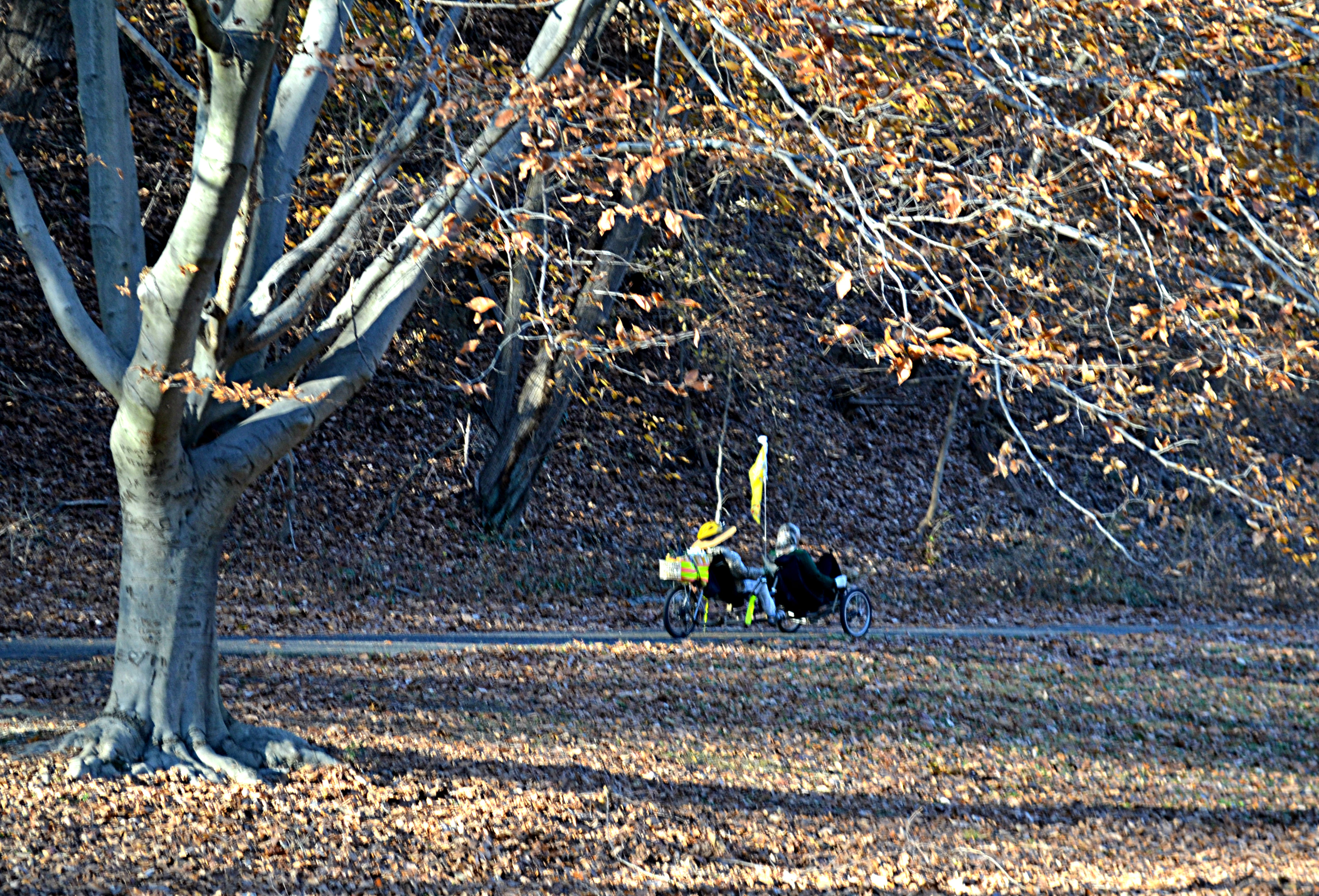
on a bridge I meet a ninety-six year old woman and her friend

wrapped up in babushka scarves and winter coats,

on a tandem dragon tricycle.


they’re on a twenty-mile ride, passing though rock creek park,

taking in the view from the the bridge as I stop, too.

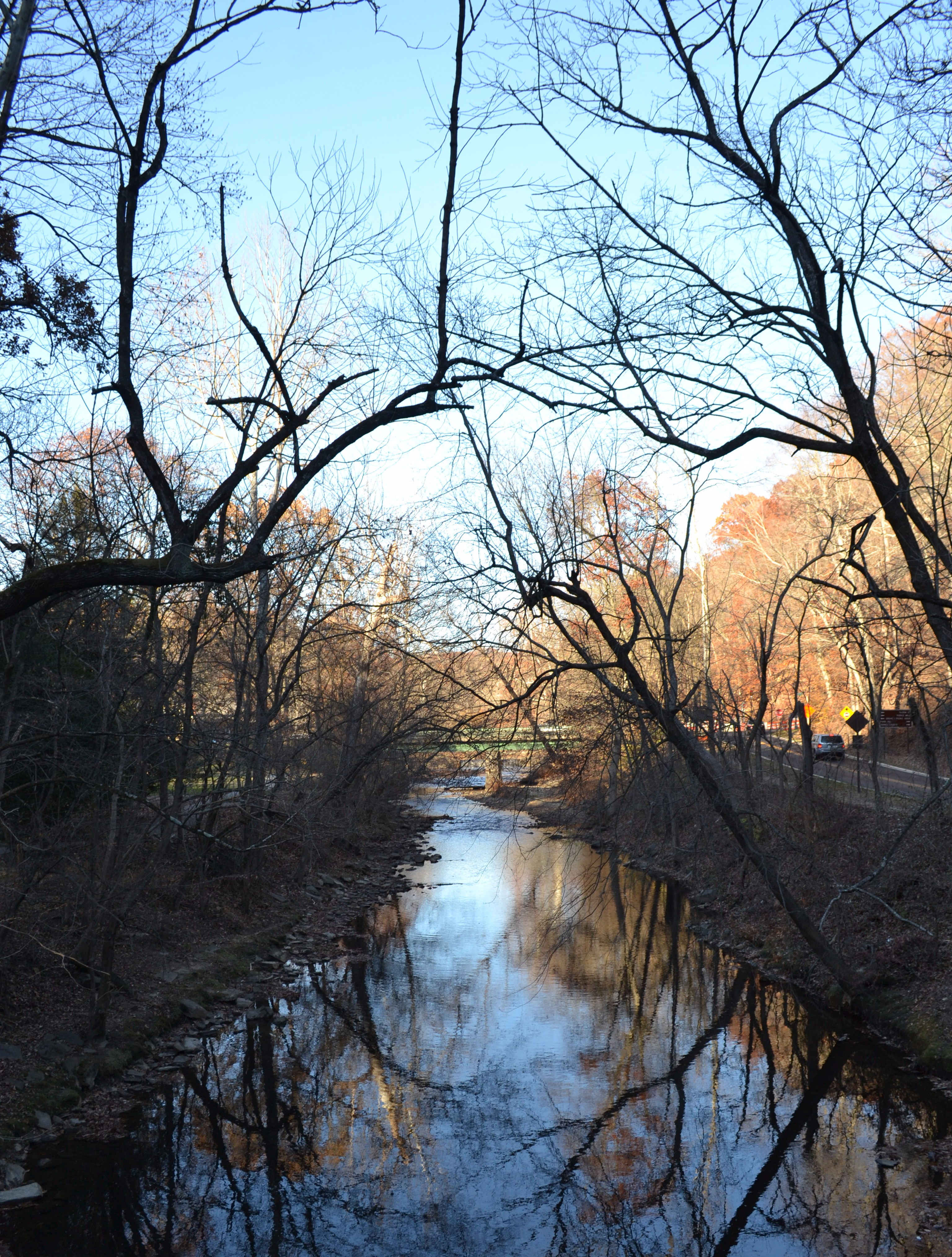
it shimmers, reflecting half-full trees as fall begins to take its leave


“lovely day isn’t it”

“amazing what a ninety-six year old and a couch potato like me can do!”

before they glide away on gold dragon wheels.

their rear license plate leaves this message in its wake: life feels good on a bike.


edited


as I walk, I nearly catch up with them. they’ve stopped again, twice,

just a bit too far ahead–

they head onward.


and in each wheel’s turn, crunching through leaves

I see reflected my hopes for age.

DSC_0634.JPG


5 Reasons it’s Rad that the 2017 Solar Eclipse is Happening in America

For a moment (2:19* to be precise) on August 21, the sun will go dark, for very rare/important scientific reasons: a total solar eclipse. Bet you knew that. An estimated 12 million Americans will experience the sky going dark,  birds going to sleep, and a slight twinge of uncertainty: what if the darkness lasts?

I think it’s particularly awesome that this total eclipse will be experienced across the United States this year. Not because Americans need another reason to seek exceptionalismbut because it’s one of those few monumental moments that remind us that humans are Lilliputian-level tiny.

ed3e0cd47316fd3daab3cf1ddce92c53--jonathan-swift-gullivers-travels.jpg-Lilliputians taking five from their bloody war over which side of an egg to break-

Earth’s conflicts and constructed** societal differences, when observed on a universal time scale,  are just as inconsequential. But we don’t create a whole lot of opportunities for people to see themselves on just #TeamEarth or #TeamHuman–even the Olympics, celebration of peace and understanding through sports, are rooted in competition and the nation-state. This celestial event is an exception.

The Great American Eclipse*** is a reminder that we are all just infinitesimal organisms on a fragile planet. We exist at the pleasure of our solar system’s star.  In 2017, in the wake of the most divisive election in memory, that’s a message that every American needs to feel in their bones. Borders are just lines someone drew once. We have to help each other. We are just one (impossibly small) earth. It’s my hope that every American looks up, gets awed, and wakes up to our commonality as human beings. That’s the number one reason I’m stoked that the eclipse is happening over America. We need this now.


More reasons why it’s rad: 

2) It forces literally everyone who experiences it (by intention or accident) to wonder, “why?” This is scientific curiosity! We need that!   

[Related PSA: Can’t get enough of scientific curiosity? Ready to level-up to inquiry? Citizen science projects are ready for you.]

img_3076a-1.jpg


3) This fashion trend needed to happen. These glasses**** have been waiting years to get outside and live their best lives.

images.jpg


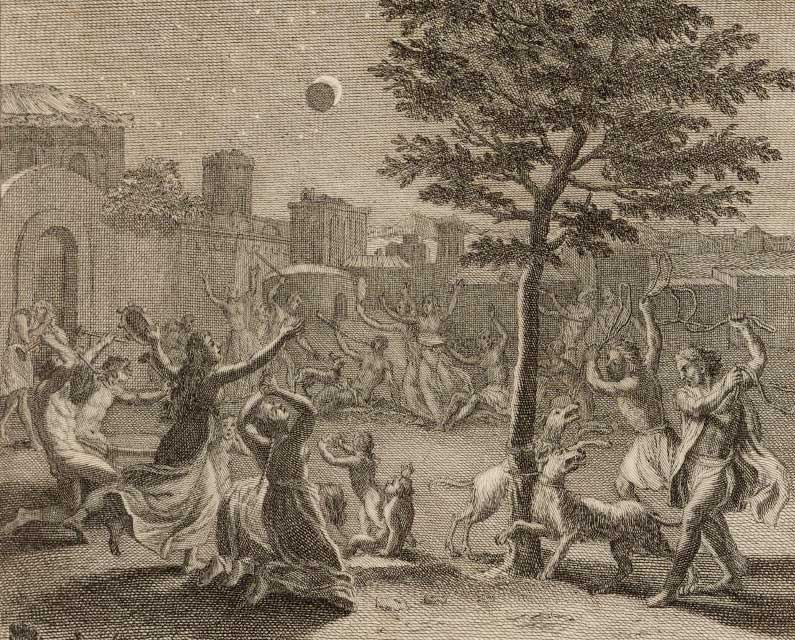
4) It is a celebration of science. Thanks to astronomers and astrophysicists and researchers through the ages,  we know why this is happening. Compare/contrast to this medieval example of people losing their shit. 

eclipse-peru.jpgEven political unrest was believed***** to be connected with this inexplicably terrifying, armageddon-like astronomical event. While 911 may still receive some panicked calls from those who somehow missed the memo, mass chaos is avoided.
5) Bonus: It’s likely that cell service will cease during the eclipse in many regions along the line of totality. Every American could use a break from Twitter at this point.

Revel in the sound of silence. And the thought of the eternal silence that could be, if the sun didn’t reappear after 2:19 minutes. #blessed to be humans together, alive, on planet earth.

download-1.jpg


So thank you, happy solar accident, for allowing Americans from sea to shining sea to have the total eclipse experience this year. Your timing is impeccable.


giphy.gif


Notes:

*in Madras, Oregon, site of NASA-Sponsored SolarFest. Duration of totality varies by location.

**Great American Eclipse. Must we burden every happy celestial accident that crosses our shores with our exceptionalism and need to be ‘great’?

***Disclosure: I’m pretty into social constructionism.

****Just make sure yours are legit. So that you legit don’t go blind witnessing a beautiful moment of total human/solar connection.

*****People are still attributing astrological and political meaning to the event. But like, fewer people are panicking.

More about the people who follow eclipses, or umbraphiles, in this fascinating NPR piece.

#TeamRefugee could be the most important thing to happen at the Rio Olympics | 2016

download

Amid the economic turmoil and security concerns plaguing Brazil as it prepares for the Rio 2016 Olympics, a new precedent is quietly being set.  For the first time in history, the International Olympic Committee (IOC) has designated a team of Refugee Olympic Athletes, which according to the IOC, “will be treated at the Olympic Games like all the other teams of the 206 National Olympic Committees.”  IOC president Thomas Bach describes the process:

“Having no national team to belong to, having no flag to march behind, having no national anthem to be played, these refugee athletes will be welcomed to the Olympic Games with the Olympic flag and with the Olympic Anthem. They will have a home together with all the other 11,000 athletes from 206 National Olympic Committees in the Olympic village.”

They are the only team that is not formed based on the idea of nation-states. This is symbolic not only of the scale of displacement globally, but also as a hugely public acknowledgement of the changing norms within the global system of nation-states. This is huge.

What’s the big deal? This might just seem like a smart move to drive awareness about displacement. On the surface, it is. It’s  a very pointed political statement by one of the most visible international organizations about the massive scale of displacement globally. How massive? Current estimates put the world population of displaced people at 65.3 million, roughly the same population as France. This is the highest level of displacement on record, and more than 20.2 million of those displaced are designated as refugees, fleeing from persecution and violence. Horror stories of refugee boats capsizing in attempted escapes from conflict zones have become a near-daily occurrence, and the question of which countries will take in refugees has become one of the most contentious issues in global politics.

Team Refugee has emerged as a way to include and acknowledge these displaced people on one of the world’s biggest stages. For scale, in 2012, theLondon Olympics was the most-watched event in TV history. Like ever. This year Team Refugee will be covered by the media, just like all 206 national teams, and their personal stories of the refugee experience will be broadcast to a huge worldwide audience. To have refugees competing, and announcers referring to members as being from Team Refugee over and over for two weeks, at one of the most heavily reported events of the year–this will be hard to ignore. This has the potential to be a big win in bringing awareness ofstatelessness to a new audience, in a new context.

But there’s more. This acknowledgement by the IOC is symbolic of changing norms in the conception of nation states. What are nation-states? The modernnation-state, what we generally perceive of as an area where the cultural boundaries match up with the political boundaries, is a development of the 19th century. It is the idea that nations should be represented within a territorially defined state, and that they have sovereignty.  Scholars, particularly of globalization, have been questioning for some time whether globalization will incite the end of the nation-state, and generally they agree that it is likely to change the nation state to some degree.  This is not a common concept among the general public, for whom it generally goes without question that, for example,  “America” resides physically within the borders of “America.”  But what happens when people of a nation state are displaced from its territory? What happens to the nationality of a people when a nation-state falls apart? How do you reconcile that massive reality (again, 65 million people) with a system built on the concept of the nation-state?

That’s where Team Refugee comes in: the sheer number of refugees and displaced people make these questions more relevant than ever. Team Refugee (athletes by definition without a territory) will compete alongside territorial nation states in a competition that is fundamentally based on the concept of nationhood. The existence of this team is an exception to theOlympic charter that says that “any competitor in the Olympic Games must be a national of the country of the NOC which is entering such competitor.” The creation of this team by the IOC is an acknowledgement that the nation-state is not the only player in these Olympic games, and by extension, the world of geopolitics.

The refugees on this team don’t fit within the current system–something new had to be created by the international organization that runs the Olympics. This is an acknowledgement that there are huge populations for whom the nation-state doesn’t serve the same function as it once did, and recognizes the necessity of an alternative. These are all concepts that have been studied for years by scholars of politics and globalization, but for the first time they will be broadcast in the context of sports, to an enormous and worldwide general audience.  This is an indicator of the changing norms of acceptance of non-state entities, at least at the Olympics. It is an opportunity for a different kind of conversation about refugees to emerge and become more widespread–a conversation that will continue to gain significance as greater numbers of people are displaced by conflict and environmental changes.

bad road haiku | 2015

DSC_0176

excerpts from four months on the road, with three near-strangers,  in a big green rv. i’d like to say they’re inspired by Kerouac’s American haiku, but tbh I discovered them later.

day one

lost in the desert

dirt road not the way to go

grand canyon ahead

grand canyon

the bus drove past us.

canyon covered in mist. fog?

the bliss called “shower.”

santa fe

art and montañas

the man with the ferret-hat

aliens are next

dallas

button showers suck

flat flat flat flat flat flat flat

needing to learn pool

__

the worst in people.

hard to see. what dallas needs:

festival of changes.

austin

should we see chingy?

contemplations made at Stubbs

after long day’s drive

__

torchy’s tacos–yes!

sometimes you just gotta sleep–

get in the cocoon.

ihop. 3am.

quick! run from the fireworks.

jump in the river?

st. louis

city museum.

take cover–ball pit of doom!

then ten. story. slide.

chicago

searching for parking.

circling circling, oy.

searching for parking.

__

dumping all of the shit

overflowing everywhere.

hazard. catharsis.

__

sit. dock of the lake.

cold cold nighttime wanderings,

wanting to climb things.

minneapolis

bowling! bowling! swerve.

gutter balls on gutter balls

and now, we dare you.

__

blackout espresso.

jitter jitter jitter: spy.

the road goes all night.

mt. rushmore

fuck yeah, america

proud to be an american?

let’s start wars, bitches.

yellowstone

thanks, bacteria.

i love you, bacteria.

a beautiful day.

idaho

turn a corner, find:

stunning valley of trees. trees!

welcome! idaho.

portland

the worst dance moves evs

wandering the streets again

how we love burlesque

eugene

there’s a game shop here?

“Turn up Eugene,” we dare you.

loud! nekeed succeeds.

crescent city 

knock knock on the door

will you speak at juvie hall?

a sobering day

washington d.c. 

cincinatti house

tour guide of polite duress–

opium interest?

louisville

kentucky derby

99 green luftballoons

you must wear a hat

new orleans

the spotted cat club:

night alive and electric.

spin me around, and–

el paso 

a fort bliss postcard

the lights of ciudad juarez

and two bananas in the checkout line

washing my face

in a bad chinese restaurant:

don’t mess with texas.

west of salt lake city

hail+wind = big sail

on the roof tying duct tape.

taking the first step.

denver

chalk art washed away,

ephemeral. and we bike.

our spot in the park.

musings | california 2015

DSC_0059The long haired boy–man walked straight into the ocean in all his clothes. He started at the edge of the sand and he walked and he walked and he walked and he walked. It was low tide, but he was persistent. The water was up to his ankles now, up to his knees, up to his chest, at his neck.  He seemed a mile out. His sweat dissolved into a salty oneness with endless sea.  I stood down the beach by the lifeguard tower, and watched. I wondered whether he would stop at all, and a tiny part of me worried that he would keep going, dragged down by the weight of the boundless. Just as I was determining whether I should call for help, he stopped. The waves lapped at his chin.  I was moored there, unable to tear my eyes away from this hairy, engulfed Jesus. I began to imagine all the people that he might be, all the stories that might be encompassed in this vast gesture of either genuine or complete surrender to nature, or don’t−care−because−I−physically−can’t capitulation. Or, wait.  Oh dear. Were those floating pants? Seaweed. False alarm.

Perhaps:

As a young boy, Harold had been brought up on a steady diet of polo and nice sweaters. By the age of eight, he was an impeccable dancer and Cotillion aficionado   (with a penchant for using words like penchant and aficionado).   Harold’s family was an incubator of politicians, and he was slated to take over the American west. At fifteen, his family moved to Wyoming because they wanted to give him the best shot at the senate. To “ensure that our western branch is suitably fortified.” One day at the end of an afternoon of baby kissing and handshaking and town hall rabble rousing, he looked down at his suitably folksy spit shined (with someone else’s spit, of course) boots, and began to cry. They were tears of rage and confusion. It was a strange moment. All of the sudden it was a realization that his entire existence had been scripted and crafted and molded. He took off his boots. He wondered of the barefoot life. He made a rash decision. Sneaking out the back of the gas station where the campaign bus had stopped, he grabbed his wallet, left his shoes, and determined not to look back until he knew, really knew, his unscripted life.  One day he reached the ocean, and saw no reason to stop at the waters’ edge. He had walked to the edge of the unknown.

Or:

Until he almost drowned, Enrico had been deep, deeply in love with water. Every sweltering day and balmy night of summer his mother said, “You, my dear, are a fish.” And this boyfish went on a rafting trip with his cousins. Idaho, Class IV. The afternoon sun winked on the water. These rapids should have been a joyous surge of splashy adrenaline. Instead, he found himself bouncing out of the rubber raft, caught in a whirling tumblerush of clearest water. He saw with perfect clarity its clarity, which seemed strange to him. Pebbles and twigs and the immense pressure and weight overcame him. The icy pings hit his chest as his head struggled to make sense of direction. His mind told him to stay calm, but his body reacted faster. The cold made it hard to breathe, and he felt his chest tighten. Breaths caught in his throat.  That moment kept coming back to him, years and years and years later. It would hit him in the bath. In the rain. In particularly dense fog. The pressure that made him feel as if at any moment his chest might explode. He was no longer a fish, and he skirted the threat by intricately crafting a life on land. And then there was today. Today, the day of his mother’s funeral.  “You my dear, are a fish.” It echoed in his brain and his mind wrapped around it and would not let it go. He left the crushingly, chokingly compiled grief with his aunts at the reception and walked walked walked walked until he felt the water surround him instead.  

Maybe:

Two weeks earlier, Charlie had been on a bus of roaming hippies. They had parked at the top of a hill in Golden Gate Park and built a massive slip n’ slide. It was a recipe for plastic burn, but honestly…why not? The San Fransisco fog had abated for a moment. It was refreshing, and so so so free. He sprinted towards the plastic sheet and, four somersaults and a monumental slide later, arrived LIBERATED, at the bottom. It was here he encountered three young onlookers. To them he said “LIFE! Is about participation! Take off your pants and embrace the slip n slide!” They giggled, considered the approaching dusk, and sought the warmth of a coffee shop instead. Or a BART station. Anything really.    Not long after, the community they had enjoyed had started slipping (so to speak) and Jeri’s temper, at the end, had ripped it to shreds. Luca, who owned the bus, had declared it the end of an era, and unceremoniously dumped everyone by the Mystery Spot in Santa Cruz to “discover the mystery of their futures.” After a few days of bumbling amazement at the glories of the power trees, the redwoods, he rideshared down the coast and had somehow found himself in Newport Beach. It was bizarre and sterile and he felt like it was some kind of crazy Stepford utopia that was about to come crashing ‘round his ears. So he decided to test his dreamself and walk deep, deep into the water. Trying to figure out if he was, in fact, awake. He needed to shake himself back to knowing feeling again.

But then again, it could be simple:

There was a college day party down the street. After too many drinks to be there or to think anything else, he had distantly heard, “Walk that way. Ocean breeze will help.” And he did. And he waited.


choose your own best adventurebuddy

 Scenario: a bus has just dropped off you and your friend in the middle of the Croatian wilderness. You walk down the path to the ranger station, and as bus rattles off into distance, you realize that Plitvice National Park’s North Entrance is closed, because it’s November. There’s a map, but you have no idea what the map’s scale is: the other entrance could be a mile away, or twenty. It might be closed. It’s quiet. Leaves rustle softly as they flutter down through the mist. As you calculate the hours until nightfall, and as a tiny voice in the back of your mind begins to wonder just how long you could survive on that chunk of bread you’ve nibbling at since morning, the reality of your situation hits.

Pick your next move.

1) You and your co-venturer realize the ridiculousness of your situation simultaneously. You look straight at each other and burst into uncontrollable laughter. Deciding to walk along the highway in the general direction of the backup ranger station,you joke (kind of) about hitching a ride from one of the occasional passing cars, and declare, “WHAT AN ADVENTURE!”

2) You collectively burst into tears, huddled on the forest floor, and begin counting down to your impending death.

3) Someone says “well this never would have happened if YOU hadn’t decided we should see the waterfalls.” The next thing you know, you’re in a full blown argument about whose fault it is that the park is closed in November. In your  bitter resentment, you refuse to speak to each other. Someone stomps off into the forest, never to be seen again.

Life is the ultimate choose-your-own-adventure, but let’s be real:  no sane traveler would pick choice two or three.

The thing is, we sometimes do.

By deciding to travel with a friend who doesn’t share your travel aspirations, your trip is 100% more likely to spontaneously combust. This is science. This is truth.  You’re suddenly angry and alone and in the middle of the Croatian wilderness.

So before you book that five month trek through Nepal with your best friend since birth, who you LOVE (and omigod we would have the best time just doing yoga and smoking weed and falling in love with sherpas), except she hates bugs, hiking, and meeting new people: stop. Hold up, wait a minute, and seriously consider your endgame, your goals. Do they match your co-adventurer’s? Be honest: do they match? It’s a simple question, but it’s the absolute most important to ask when you’re seeking to maximize the awesomeness of your next big adventure. It’s always better to know before you go. (And if you have a sudden epiphany that you and your bff would go batshit crazy  on a long trip with a gazillion variables: plan something easy and short, like, idk, a weekend in Cabo. Copious margs tend to solve these kinds of problems.)

Compare:

  1. What’s your budget? (It’s number one for a reason. Hugely important.)
  2. How much or little do you need to plan in order to be at ease?
  3. Related: how comfortable are you with change, and how willing are you to be flexible?
  4. How much sleep do you need? Are you on an early or late schedule?
  5. What’s your focus? (e.g. seeing ALL the sights, partying as much as possible, “relaxing,” catching every single pro soccer game on your route,  tanning for three months, celebrity stalking, intensive bird watching, etc.)
  6.  Where do you fall on the adventurousness scale?  I like to use a scale of wonderbread to skydiving, but to each her own.
  7. Need for showers? (aka your capacity for surviving with travel grit for a day or two while, for instance, climbing up an awesome mountain)
  8. How’s your cultural sensitivity? (or, how likely are you to dub a different way of doing something as “so backwards,” dismiss other cultures’ systems of politeness, or crack offensive jokes)
  9. How do you like to make decisions? By yourself? Collaboratively?
  10. How much/little do you need time alone while you travel?
  11. What’s your reaction in a crisis? (panic, call mom, find a solution, befriend the nearest police officer, etc.)
  12. How well do you compromise?

Compare notes, be honest with your goals and expectations, and when the unexpected knocks you off your feet (as it always does), you’ll laugh, and figure out how to get out of that hot mess together. Because that’s what travel soulmates/co–venturers do.

Full disclosure: Lest you think I’m a judgmental best-friend hater, making and keeping friends is one of my favorite activities and biggest priorities. It’s precisely because of this that I’m picky about my long-term travel buds. Trying to keep both my sanity and my friendships 🙂

movement | bedford, VA 2014

This is a story from a wonderful chef and  lover of food, Ron. It is written as remembered from his telling.

For these past twenty years, I have never lived more than six months in one place. I did a lot of things, worked in restaurants as a dishwasher and everything else, and later I would help get new restaurants started. For awhile I worked as a truck driver for Subway. I will never eat there again. We would deliver whole trucks of meat that had expiration dates in two years. Meaning the meat on your sandwich could be two years old. Eat fresh? I would see that on the TV and cringe. After that I was a Greyhound bus driver for a long time. On one trip across the country this lady and I got to talking. She was a southern belle out of Savannah, and we talked the whole ten hours.  We were getting close to the end of the line when she had been quiet for a few minutes. I looked over and saw such a look of consternation on her face.  

“What’s wrong?”

“I’m trying to figure out how to ask you out,” she said.

When the bus reached the end of its route we had a wonderful dinner together. Great conversation, great laughs, great moments. We were going different ways. We said goodbye.

Seven months later, I got off a Greyhound in LA. You’ll never believe this, but she was the first person I saw off the bus. Of all the places, of all the times. If these things are supposed to happen, they’ll happen. I walked right up to her and asked her if she wanted to get dinner. We had another perfect night together. Another perfect moment in time.

That’s not how Karen and I met, though.

We had both reached a point in our lives where we had entirely given up. We had both stopped looking, and resolved to live our lives alone. It was the last thing either of us were expecting. The short story? We went to tea. And then we each went home and thought ‘what the heck was that?’ And, we’re not monks.  We’ve been together for a year and a half now. This year, while I was packing to come here to camp for the summer, she said “you can leave things here, you know,” and I did. I left a whole drawer. I’m going back to Santa Barbara, and after all these years being in one place and another, it’s finally a place that feels like home, you know?

around the world in six weeks | bedford, VA 2014

We stood in a circle on the soccer field, beneath the stars. A girl stepped forward to speak. I was surprised, because the first few days of the program session, she barely spoke at all.  “I am so glad for these past two weeks, the friends I have made, and the experiences I have had here.  I know now that I am not alone.”

For that single moment, I knew that my summer spent working at the Global Youth Village had been beyond worth it.  Another participant stepped forward.

“I was in a bad mental place before I came here,” said a very bright young lady who never missed an opportunity to share. “Now I know I have the skills and the support so I can go out and produce positive things in my future. We have to go at it together.”

And another, his face brightened by candlelight, as he named every single one of us around the circle, and told us we would never be forgotten.

The next day, they were all going back to their homes across the world: Poland, Ghana, Taiwan, Japan, Libya, France, North Carolina, Virginia. Their fleeting community would be scattered.

Twelve days earlier, thirty high school students had arrived in the forest outside Bedford, Virginia.   For thirty five years, Legacy International’s longest running summer program has done the difficult work of bridging languages and cultures to enable intercultural understanding within its participant population, and give each young person the tools to spread that understanding within their home community. In my cabin, Salaam, my eight high school girls took a few days to warm up and become acclimated to camp life. There was bunking in a cabin to get used to,  the program’s culture of dialogue and sharing, and a camp’s typical cadre of spiders and creatures of the night.   There were four ESL learners in my cabin, and to be perfectly honest, that first day I was terrified.  On arrival day, I had spent hours asking every question I could think of (What do you do at school? What is your family like?  Tell me about your pets!) to fill the void–and to little response. The gap between those students and the rest of my cabin was like a gaping crevasse, and I felt like my brain was about to explode with the pressure to bring them all together as a community.  At that point, the only thoughts I could cohesively gather were “Tree? Bee!” Someone had been stung that first night, life was charades, and everything felt as if it were collapsing into a fiasco. But keeping it in perspective, I could not even begin to imagine how young Yu Zhe, who spoke not more than ten words of English, must have felt. “Trust the process,” I was told.  I laughed the delirious laugh of the exhausted, and asked for a hug.

Those first few days, I became a lot more comfortable with silence, something which I usually try to avoid at almost any cost. I knew, though, that they needed me to shut up so that they could take initiative with each other.  Slowly, slowly, slowly conversations started. “What is it like in Taiwan? Tell me about your school! You take the metro in Budapest? What kind of movies do you like to watch? Frozen!?  You know Frozen?! I LOVE Frozen. Cue the  “Let it Go” sing along.   And in those moments was the true beginning. I remember celebrating (like jumping up and down in the staff lounge celebrating) the day the silent one came down from her bunk to sit on the couch, and cautiously ask one of the Taiwanese girls for help with some characters. Contact!  My English speaking girls took a Chinese language and culture class, and soon started practicing with the native Mandarin speakers in my cabin, who taught them not just tones and pronunciation, but card games and a few favorite Chinese songs.They played guitar. They played  a uproariously silly game called Pterodactyl. They danced. They talked about boys and family and school and cultural whys and hows.  The cabin meeting on the fourth day was filled with laughter. Hun hao. Very good.

And on that last evening as we reflected on the nights of folk dancing, the days of discussions about gender,  Fukashima,  and the merits and pitfalls of ping pong and Justin Bieber songs, we blew out our candles. We sent our lights back to the stars.  Good night, goodbye, and I love you echoed through the night air in a tangle of languages swirling together to rest peacefully in one quiet understanding: friendship.  Trust the process.